 2
Dec,2025
2
Dec,2025
Booking a venue in London isn’t just about finding a space-it’s about getting a response. Too many people send vague emails and wonder why they never hear back. London venues get dozens of inquiries a day. If your email looks like a copy-paste job, it gets ignored. But a clear, polite, and specific message? That gets answered. Here’s how to write emails that actually work.
How to Write an Enquiry Email That Gets a Reply
Start with the basics: don’t write a novel. Venue managers aren’t reading essays. They’re scanning for key details. Your email needs to answer four questions fast: What are you booking? When? How many? What’s your budget?
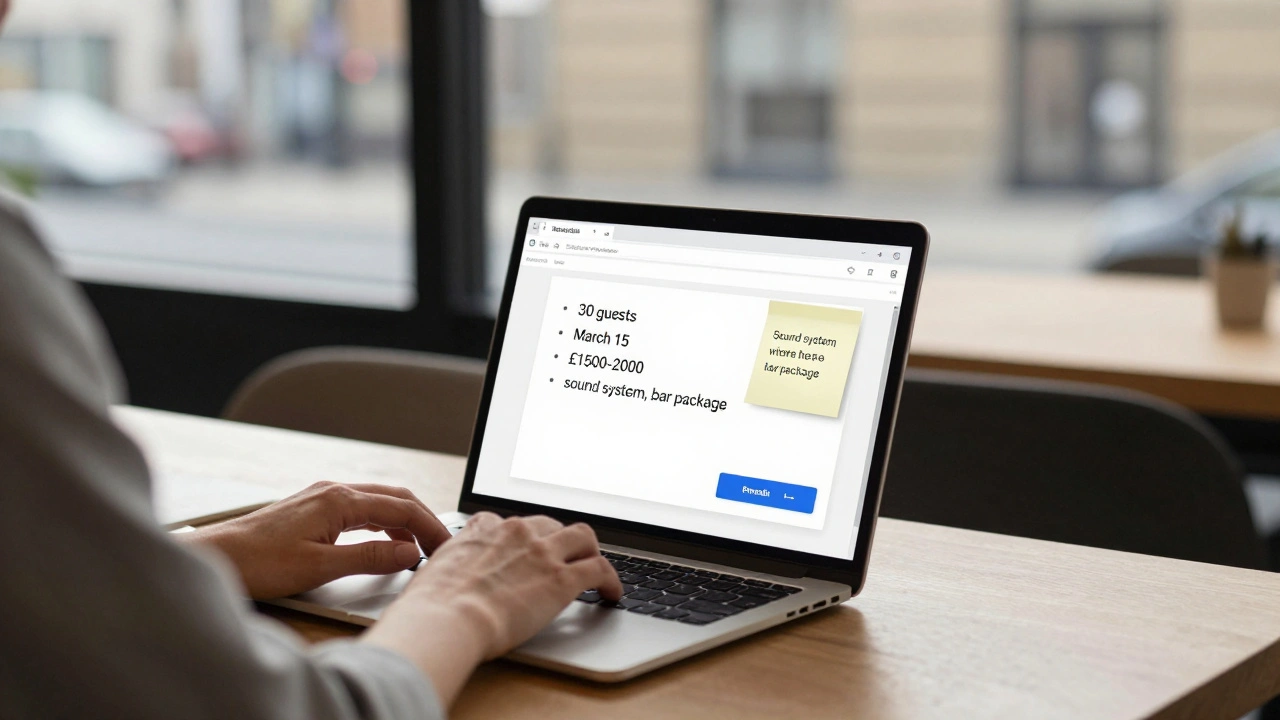
Example: Instead of saying “I’m looking for a place for an event,” say “I’m looking to book a private room for 30 guests for a live music night on Saturday, March 15, 2026. Budget range: £1,500-£2,000.” That’s it. No fluff. No “I hope this finds you well” unless you’re writing to a small family-run pub.
Include your contact info. Always. Don’t make them hunt for your number or email. Put it under your name. If you’re booking for a company, mention it upfront. “Booking on behalf of SoundWave Events, Sydney” tells them you’re serious.
Don’t ask for a price list. Ask for a quote. “Do you have a price list?” sounds like you haven’t done any research. “Can you send a quote for a private room with sound system, 3-hour bar package, and 30 chairs?” shows you know what you need.
Attach a rough timeline if you have one. “We’d need access at 4 PM, event ends by midnight.” That helps them slot you in. If you’re flexible on dates, say so. “Open to Friday or Saturday in March.” Flexibility gets you better rates.
Best Email Templates for London Venue Enquiries
Here’s a ready-to-use template that works for most venues-from rooftop bars in Shoreditch to historic halls in Westminster.
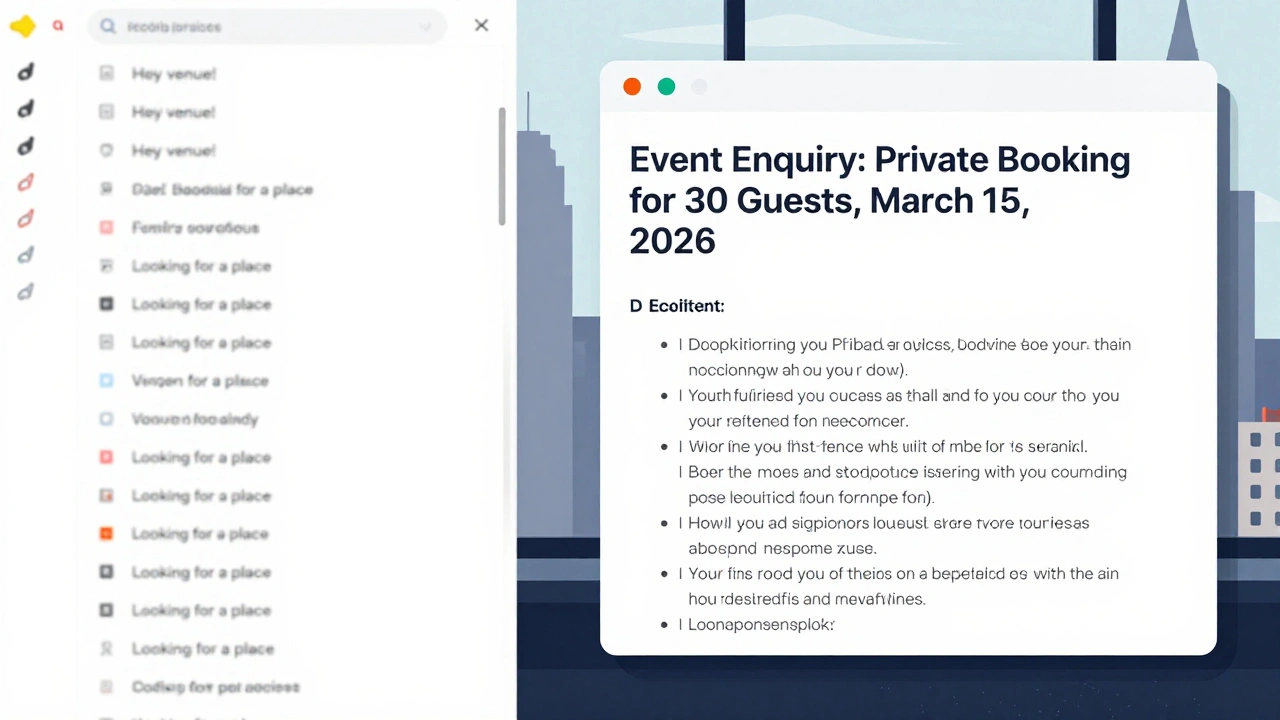
Subject: Event Enquiry: Private Booking for 30 Guests, March 15, 2026
Dear [Venue Name] Team,
I’m looking to book a private space for a live music event with around 30 guests on Saturday, March 15, 2026. We’d need access from 4 PM, with the event ending by midnight.
Requirements:
- Private room or section (separate from main area)
- Sound system with mic and Bluetooth input
- 3-hour bar package (beer, wine, soft drinks)
- 30 chairs and 5 tables
- Option to bring in our own caterer (or preferred in-house catering)
Budget range: £1,500-£2,000. Are you available on this date? If not, I’m open to other weekends in March.
My name is [Your Name], booking on behalf of [Your Company/Event Name]. You can reach me at [Phone] or [Email].
Thanks for your time-I look forward to hearing what you can offer.
Best regards,
[Your Full Name]
How to Follow Up Without Being Annoying
Most venues reply within 48 hours. If you haven’t heard back after 3 days, send one polite follow-up. No “Just checking in!” messages. Be specific.
“Hi [Name], I sent an enquiry on [date] about booking for March 15. I know you’re busy, but I’d appreciate any update on availability or if you need more details from my side.”
That’s it. No guilt trips. No “I’ve been waiting!” No “I’m considering other venues.” That last one? They hear it every day. It doesn’t pressure them-it makes you look desperate.
If you get a “We’re fully booked,” ask: “Is there a waitlist? Or any dates in April you might have open?” Sometimes they’ll move things around if they see you’re serious.
Confirmation Emails: What to Send After Booking
Once they say yes, don’t just reply “Cool, thanks!” Send a formal confirmation email. This protects you. It’s your paper trail.
Here’s a template:
Subject: Confirmed: Private Booking at [Venue Name] - March 15, 2026
Dear [Venue Contact Name],
Thank you for confirming our booking for a private event on Saturday, March 15, 2026. To confirm the details:
- Date: Saturday, March 15, 2026
- Time: 4:00 PM - 12:00 AM
- Guest count: 30
- Package: Private room, sound system, 3-hour bar (beer, wine, soft drinks), 30 chairs, 5 tables
- Deposit paid: £500 (on [date])
- Balance due: £1,200 by March 1, 2026
- Catering: In-house only (as agreed)
Please confirm if this matches your records. If anything is incorrect, let me know by [date].
Looking forward to the event. Please let me know if you need any additional information from our side before the date.
Best regards,
[Your Full Name]
[Phone]
[Email]
What to Avoid in All Emails
Here are the top three mistakes people make:
- Asking for “the best deal.” That’s not a question-it’s a negotiation tactic. Venues don’t play that game. Ask for options instead: “Do you have any packages under £1,800?”
- Using emojis or slang. “Heyyy! Can we book?? 😊” looks unprofessional. Even if the venue is casual, keep it clean. They’re professionals.
- Not checking the venue’s website first. If their site says “No outside alcohol,” don’t ask if you can bring wine. You’ll look careless.
Also, never send the same email to 10 venues. They talk to each other. If you copy-paste “Hi, I’m looking for a venue in London,” they’ll know. And they’ll ignore you.
Real Example: What Works in London
A client of mine booked a rooftop bar in Camden last year. Her email was short:
“Hi, I’m planning a 40-person birthday party with live acoustic music on Saturday, June 21, 2025. Need a private section, sound setup, 4-hour bar, and 40 chairs. Budget: £2,200. Are you available? I’m flexible on timing if needed.”
She got a reply in 2 hours. Why? She gave them everything they needed to say yes. No guesswork. No back-and-forth.
That’s the trick. London venues don’t want to hunt for details. They want you to hand them the puzzle pieces.
What Happens After You Book?
Don’t disappear. Three weeks before the event, send a quick check-in:
“Hi [Name], just confirming everything’s on track for March 15. Will the sound tech be on-site at 3 PM? Any special access instructions for our crew? Looking forward to it!”
That’s all. It shows you’re organized. It reminds them you’re real. It builds trust.
On the day, show up early. Bring a printed copy of the contract. Thank the staff. A simple “Thanks for making this happen” goes a long way. London venues remember who’s easy to work with.
Final Tip: Keep a Master Template
Save your best enquiry and confirmation emails in a folder. Update them yearly. Change the date, guest count, budget. Keep the structure. Over time, you’ll build a library of emails that work. No more starting from scratch.
London’s busy. Venues are overwhelmed. But the right email? It cuts through the noise. Be clear. Be specific. Be polite. And you’ll get the booking.
What’s the best time to email London venues for availability?
Send your enquiry on a Tuesday or Wednesday morning. Most venues are less busy midweek, and staff are more likely to respond before their weekend bookings pile up. Avoid Mondays (they’re catching up) and Fridays (they’re finalizing weekend plans).
Should I call after sending an email?
Wait 48 hours. Then call. Say: “Hi, I sent an email about a booking on [date]. Just wanted to make sure it didn’t get lost in the inbox.” Most venues appreciate the follow-up-it shows you’re serious. But don’t call every day. One polite call is enough.
Can I negotiate the price on a London venue?
Yes, but not by asking for a discount. Ask for value: “Would you consider including an extra hour of bar service if I book the full 6 hours?” or “Can you waive the cleaning fee if I leave the space as-is?” Venues prefer adding value over lowering price. It keeps their rates intact.
Do I need to pay a deposit to secure a booking?
Almost always. Most London venues require a 25-50% deposit to hold the date. Make sure the contract says what happens if you cancel. Some venues refund if you cancel 30+ days out. Others don’t. Always ask before paying.
What if the venue doesn’t have what I need?
Ask if they can bring in a partner. Many venues work with local sound companies, caterers, or decor services. “Do you have a recommended audio technician?” or “Who do you usually use for lighting?” If they’ve worked with them before, they’ll likely vouch for them. This saves you time and stress.