 3
Mar,2026
3
Mar,2026
London has more cocktail classes than ever, but not all of them are worth your time or money. You might have seen ads for cocktail classes promising you’ll become a professional mixologist in two hours, or maybe you’re just looking for a fun night out with friends. Either way, comparing these classes isn’t just about which one costs less-it’s about what you actually get. Here’s how to cut through the noise and pick the right one.
What’s included in a typical cocktail class?
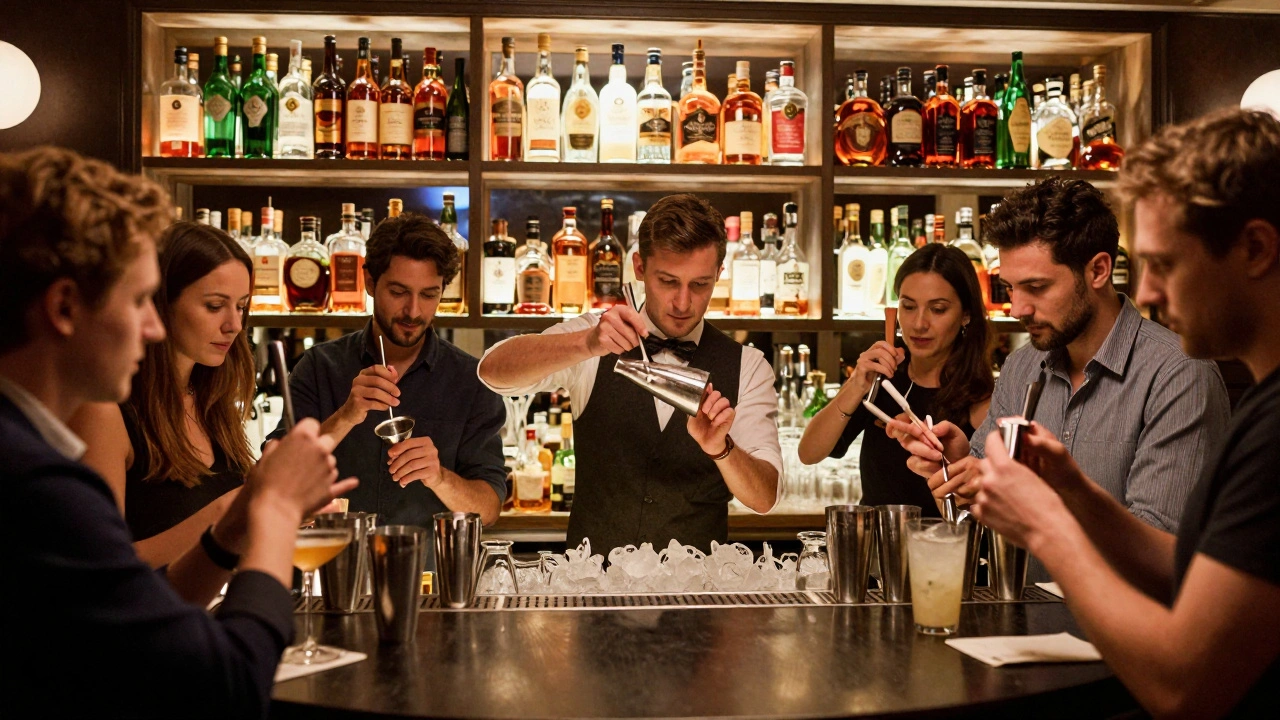
Not every class is created equal. Some are just fancy tasting sessions where you sip three drinks and get a quick demo. Others give you real hands-on time behind the bar, teaching you how to shake, strain, and balance flavors. The best ones include:
- 4-6 cocktails made from scratch
- Access to professional-grade tools (shakers, jiggers, bar spoons, muddlers)
- Instruction on spirits, modifiers, and classic techniques
- A take-home recipe booklet
- Small group size (under 8 people)
Classes that skip any of these are often just themed parties with a bartender. If the description says "learn to make cocktails" but doesn’t list what you’ll actually do, that’s a red flag.
Price ranges you’ll actually see in London
Prices vary wildly, but here’s what real classes cost as of early 2026:
| Price Range | What You Get | Who It’s For |
|---|---|---|
| £35-£50 | 2-3 cocktails, basic tools, 60-75 minutes, group of 12+ | Groups looking for a fun night out |
| £60-£85 | 4-5 cocktails, professional equipment, 90-120 minutes, group of 6-8 | Beginners who want real skill-building |
| £90-£130 | 6+ cocktails, advanced techniques (fat-washing, smoke infusion), 2+ hours, personalized feedback | Enthusiasts or those considering a career in mixology |
Anything under £35 usually means you’re paying for the venue, not the instruction. Anything over £130 better include something unique-like a private session, a tour of a distillery, or a certification.
Don’t fall for the "premium" trap
Some classes charge extra for "luxury" ingredients like truffle bitters or vintage gin. But here’s the truth: most professional bartenders don’t use these in real bars. What matters more is learning how to work with common spirits-gin, rum, tequila, whiskey-and basic modifiers like simple syrup, vermouth, and citrus.
A class that teaches you to make a perfect Old Fashioned with a £40 bottle of bourbon isn’t better than one that teaches the same drink with a £25 bottle. It’s the technique that counts. Ask: "Will I be able to recreate this at home?" If the answer is no because the ingredients are too obscure, walk away.

Check the instructor’s background
Who’s teaching this? A bartender with five years of experience at a top London bar? Or someone who just took a weekend online course? Look for instructors who’ve worked at known venues like The Savoy, The American Bar at The Langham, or The Connaught.
Some schools list their staff’s LinkedIn profiles or Instagram handles. Go check them. If they’ve trained under famous bartenders like Salvatore Calabrese or Erik Lorincz, that’s a strong signal. If their bio just says "cocktail enthusiast," that’s not enough.
Read reviews that go beyond "great time!"
Google and Tripadvisor reviews are full of vague praise: "Amazing experience!" "So fun!" "Would recommend!" But you need specifics. Look for comments like:
- "We learned how to adjust sweetness without overpowering the spirit."
- "The instructor showed us three ways to strain a cocktail and explained why each matters."
- "I walked away with five recipes I’ve already tried at home."
If no one mentions technique, learning, or practical takeaways, the class is probably just entertainment.
Ask about what happens after the class
The best classes don’t end when you leave. Some offer:
- Access to a private online community with recipe updates
- Discounts on bar tools or spirits
- Follow-up workshops (e.g., "Advanced Stirring Techniques")
One class in Shoreditch gives you free access to their open-bar practice nights once a month. That’s worth more than the class itself. Ask: "Is there a next step?" If the answer is "no," you’re paying for a one-off experience.

Location matters more than you think
A class in Covent Garden might cost £20 more than one in Hackney, but is it worth it? Probably not. What matters is whether the space feels like a real bar. Look for:
- Properly stocked back bar (not just three bottles on display)
- Ice bins, chillers, and proper glassware
- Space to move around without bumping into other students
Some classes are held in cafes or event spaces that look nice on Instagram but don’t function like a working bar. You won’t learn much there.
Final checklist before you book
Before you click "Pay Now," run through this quick list:
- Does the class list exactly what cocktails you’ll make?
- Is the instructor’s real bar experience mentioned?
- Are there 8 or fewer people per session?
- Will you get to use real tools, not just plastic ones?
- Do reviews mention actual learning, not just "fun"?
- Is there a take-home resource (recipe sheet, video, app access)?
If you can answer "yes" to at least five of these, you’ve found a class worth your money.
What most people miss
Everyone focuses on price. But the biggest mistake is choosing based on how fancy the venue looks. A sleek, minimalist space with neon lights doesn’t mean better instruction. I’ve seen £120 classes where the instructor barely spoke, and £65 classes where the bartender spent 40 minutes breaking down how to properly muddle mint without turning it bitter.
What you’re really paying for isn’t the gin. It’s the time, attention, and skill transfer from someone who’s done this for years. If you’re not learning something you can use tomorrow night at home, you’re overpaying.
Are London cocktail classes worth the cost?
Yes-if you pick the right one. Classes between £60 and £85 give you the best balance of hands-on time, quality instruction, and practical takeaways. If you’re serious about learning, spending more than £90 only makes sense if you get ongoing access, like practice nights or advanced modules. The cheapest classes rarely teach real skills.
Can I learn cocktail making without attending a class?
You can, but it’s harder. Online videos won’t correct your technique. You won’t know if you’re shaking too hard, using the wrong ice, or over-diluting. A good class gives you immediate feedback. Plus, you’ll get to taste your mistakes alongside others and learn why they didn’t work. That’s something no YouTube tutorial can replicate.
Do I need to bring anything to a cocktail class?
No. All tools, ingredients, and glassware are provided. Wear something you don’t mind getting a little wet-some shaking can splash. No need for fancy clothes. Most places are casual, even if they’re in a fancy neighborhood.
Are cocktail classes only for beginners?
Not at all. Many classes offer advanced tracks for people who already know how to make a Martini or Negroni. Look for keywords like "advanced techniques," "spirit profiling," or "balancing cocktails." Some even let you build your own recipe with instructor guidance. If you’ve been making drinks at home for a while, you’ll still learn something new.
How far in advance should I book a cocktail class in London?
Book at least 2-4 weeks ahead for weekends. Popular spots like The Bar at The Ned or The Little Book Club fill up fast. For weekday classes, you can often book a week in advance. If you see a class with open slots two days before, it’s probably because the group size is too large or the instructor isn’t well-known.