 7
Dec,2025
7
Dec,2025
When your international friends visit London, they don’t just want to see Big Ben or take a photo with a red bus. They want to feel the pulse of the city-the real, living culture that makes London different from every other place they’ve been. Planning cultural highlights isn’t about ticking off tourist spots. It’s about creating moments that stick. Moments where they laugh at a pub joke, get quiet in front of a Van Gogh, or stand stunned by a street performer in Covent Garden. Here’s how to do it right.
Start with what they already know
Most visitors come with expectations shaped by movies, TV shows, and Instagram. They expect the Tower of London, Westminster Abbey, and the Changing of the Guard. That’s fine. But don’t stop there. Use those familiar sights as anchors, then build around them with deeper experiences.Take the Tower of London. Most people spend 30 minutes snapping photos and leave. But if you go with a Blue Badge guide who tells the real stories-the treasons, the ghosts, the royal betrayals-it becomes unforgettable. Book a guided tour that focuses on the Crown Jewels and the Tudor era. Skip the audio guide. Real people telling real stories make history feel alive.
Same goes for the British Museum. Don’t just walk through the Egyptian galleries. Head straight to the Rosetta Stone, then ask the staff if there’s a curator talk that day. Many museums offer free 20-minute talks at 2 p.m. They’re quiet, intimate, and packed with insight. Your friends will remember that more than the entire museum’s worth of exhibits.
Food is culture, not just a meal
London’s food scene is a map of the world. If your friends are from Japan, take them to a traditional Japanese izakaya in Soho. If they’re from Brazil, book a table at a Brazilian churrascaria in Brixton. But don’t just feed them. Explain why they’re eating what they’re eating.Try a Sunday roast at a local pub in Islington. Don’t say, “This is British food.” Say, “This is what families eat after church. The gravy? Made from the roast drippings. The Yorkshire pudding? It’s not dessert-it’s a bread that soaks up the juices. And yes, we eat it with our hands.” That context turns a meal into a cultural lesson.
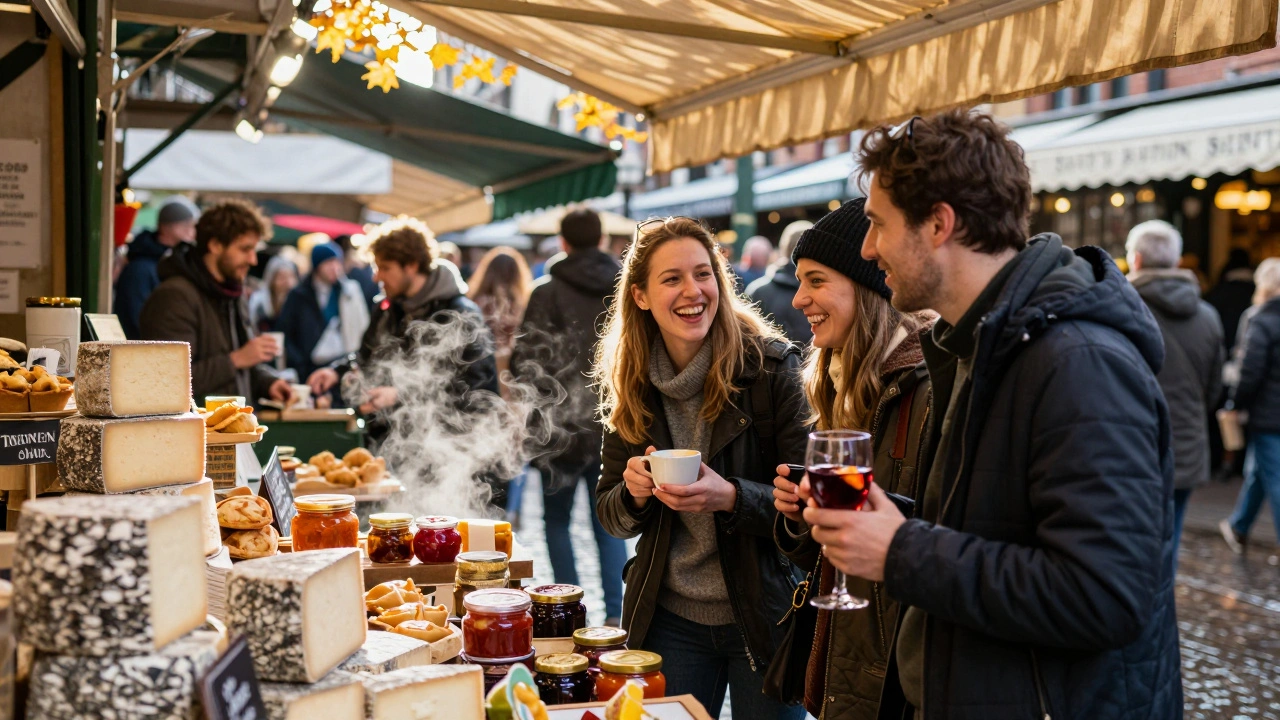
Visit Borough Market on a Saturday morning. Let them taste Stilton cheese, sample artisanal chutneys, and try a pasty from Cornwall. Talk about how food here reflects centuries of immigration-from Italian gelato stalls to Caribbean jerk chicken. London’s food isn’t just diverse. It’s layered. Each bite tells a story.
Go beyond the West End
Most tourists stay between Piccadilly and Camden. That’s fine for the first day. But by day three, they’re ready for something deeper. Take them to Peckham. Walk through the Rye Lane market. Watch Nigerian tailors stitching dashikis, taste Ethiopian coffee brewed in a jebena pot, and listen to Afrobeat blasting from a corner shop. Peckham isn’t a tourist zone. It’s where London lives.Or head to Hackney. Visit the Street Art Tour on Mare Street. See murals by artists like Ben Eine and ROA. Ask your guide why a giant octopus is painted on the side of a laundromat. Learn how street art here isn’t vandalism-it’s protest, pride, and identity. Many of these murals were painted after the 2011 riots, as a way to reclaim public space.
Don’t forget the South Bank. Walk from Tower Bridge to the Tate Modern. Stop at the Shakespeare’s Globe. If it’s summer, catch a free performance in the open-air theatre. If it’s winter, sit by the river with a hot chocolate from a vendor and watch the lights reflect on the water. The South Bank isn’t just a walk. It’s a living stage.
Music and performance: London’s heartbeat
London doesn’t just have music. It has movements. Jazz in Soho. Reggae in Brixton. Classical at the Royal Albert Hall. Indie rock in Dalston. Pick one, and make it personal.If your friends love live music, skip the big concerts. Go to the Jazz Cafe in Camden. It’s small, loud, and full of energy. Or head to the 100 Club on Oxford Street-the oldest live music venue in the UK. It hosted The Clash, Led Zeppelin, and Amy Winehouse. Tell them that. Then let them feel the floor shake under their feet.
For theater, skip the West End if they’re on a budget. Try the National Theatre’s £15 standing tickets. Or go to the Young Vic, where productions are bold, modern, and often political. A recent show there reimagined Antigone as a Syrian refugee story. That’s the kind of performance that changes how people see the world.
Quiet moments matter too
Not every cultural experience needs noise. Some of the most powerful moments happen in silence.Take them to the Garden at 10 Downing Street. No, you can’t go inside. But you can stand outside the gates and look at the small plaque that says “The Prime Minister’s Residence.” Talk about how this tiny garden, hidden behind iron railings, is where decisions that affect millions are made.
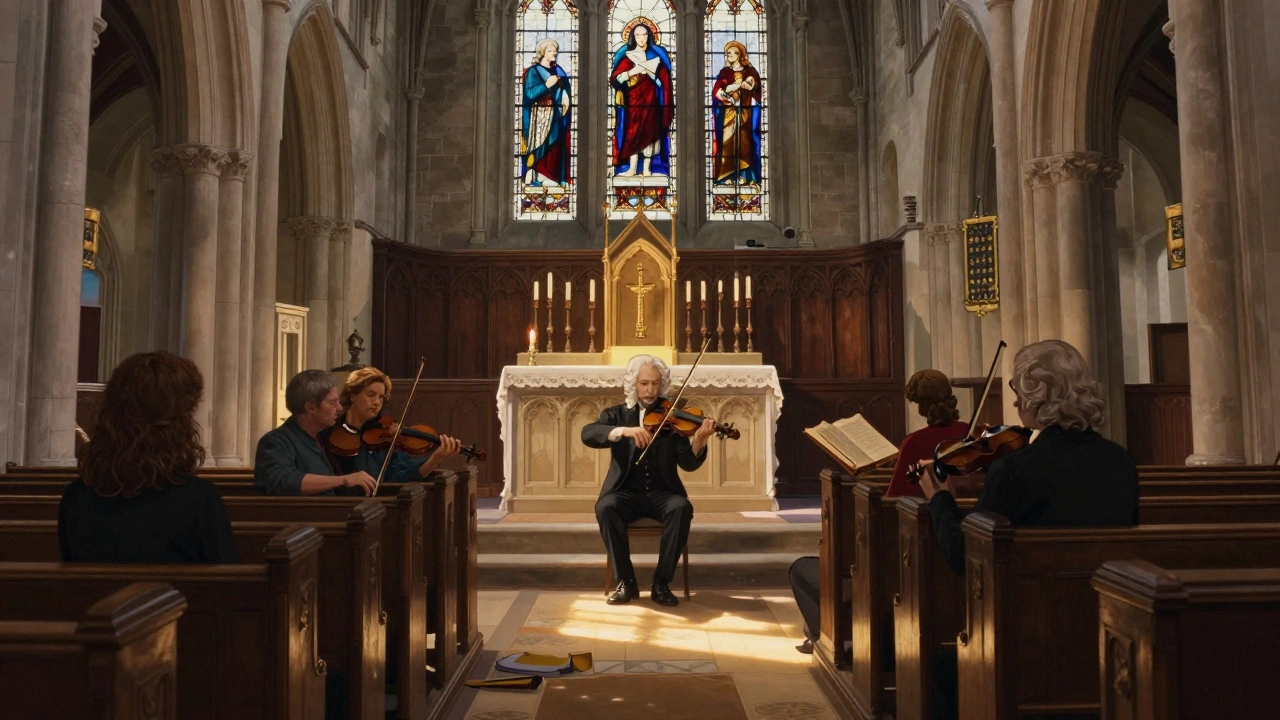
Or visit the Church of St. Martin-in-the-Fields in Trafalgar Square. Every weekday at 1 p.m., they host a free 30-minute classical concert. No tickets. No lines. Just 50 people sitting on wooden benches, listening to Bach in a 300-year-old church. It’s quiet. It’s sacred. And it’s free.
For a deeper silence, go to the London Stone in Cannon Street. It’s a small, cracked block of limestone embedded in the wall of a bank. No sign. No crowd. Just a stone that’s been here since Roman times. Legend says if it disappears, London falls. Ask them what they think that means.

Timing is everything
London moves differently depending on the season. In December, the city glows with Christmas markets. Covent Garden’s market is packed, but try the ones in Southwark or Greenwich. They’re quieter, with handmade crafts and mulled wine served in ceramic mugs.Summer brings open-air cinema at the BFI Southbank. Winter has the Winter Lights Festival along the Thames. In spring, the cherry blossoms bloom in Regent’s Park. In autumn, the leaves turn gold in Hampstead Heath. Plan around these moments. They’re not just pretty-they’re part of the rhythm of the city.
And don’t forget the weather. If it’s raining, pivot. Visit the Victoria and Albert Museum’s fashion exhibits. Or take a tea tour at Fortnum & Mason. Learn how to brew the perfect cup, why milk goes in first, and why the British drink tea at 4 p.m. even if they’re not hungry.
Let them lead sometimes
You’re the guide, but you’re not the director. Ask your friends what they’ve always wanted to see. Maybe they’re obsessed with Harry Potter. Take them to Platform 9¾ at King’s Cross. Let them take the photo. Then take them to the nearby Leadenhall Market-the real inspiration for Diagon Alley. That’s the magic trick: connect the fantasy to the real.If they’re into fashion, skip Oxford Street. Go to the Camden Market’s vintage stalls. Let them dig through 1970s leather jackets and 1990s punk pins. Talk about how London’s style has always been about rebellion.
If they’re quiet, take them to the Serpentine Gallery in Hyde Park. Sit on a bench. Look at the water. Don’t say anything. Sometimes, the best cultural experience is the space between words.
End with something simple
The best cultural moment might not be a museum, a concert, or a market. It might be sitting on a bench in St. James’s Park, watching the pelicans get fed at 3 p.m. every day. It’s free. It’s strange. It’s utterly London.Bring a sandwich. A thermos of tea. And no agenda. Let them ask questions. Let them be quiet. Let them laugh. That’s when the real connection happens-not when you’re explaining something, but when they realize they’re not just visiting London. They’re part of it, even if just for a few days.
What’s the best time of year to plan cultural activities for international friends in London?
Spring (March to May) and autumn (September to November) are ideal. The weather is mild, crowds are smaller, and events like the Chelsea Flower Show or London Design Festival happen then. Summer has long days and open-air events, but it’s busy. Winter has Christmas markets and festive lights, but it’s cold and dark early. Avoid August-many locals are on holiday, and some smaller venues close.
How do I plan a cultural itinerary for a group with different interests?
Start with a group survey: ask each person to name one must-see thing. Then build a core itinerary around the top three. Mix high-energy spots (markets, concerts) with quiet ones (gardens, galleries). Allow free time so people can explore on their own. Use public transport-it’s efficient and lets everyone choose their own pace. Don’t try to cram everything in. Three meaningful experiences a day are better than six rushed ones.
Are there free cultural experiences in London?
Yes. Most major museums-the British Museum, Tate Modern, National Gallery, V&A-are free to enter. The South Bank has free street performances daily. St. Paul’s Cathedral offers free choral services. The Royal Parks have free concerts in summer. Many churches host free lunchtime music. London’s culture doesn’t cost money-it just needs curiosity.
What should I avoid when planning cultural activities?
Avoid tourist traps with overpriced food and fake experiences-like the London Eye if you’re not going up, or the Madame Tussauds if your friends aren’t into wax figures. Don’t force them into long museum tours if they’re tired. Skip the “London in One Day” tours-they’re exhausting and superficial. And never assume everyone likes tea or cricket. Ask first.
How can I make the experience feel personal, not generic?
Connect the experience to their background. If they’re from Mexico, take them to a Mexican restaurant in Brixton and ask how it compares to home. If they’re from Germany, visit the German Church in Soho and talk about post-war rebuilding. Share a story from your own life-why you love this place, what it meant to you. Personal stories turn sightseeing into connection.