 14
Mar,2026
14
Mar,2026
BY : Sashi Locke
0 Comments
When you're planning a party, corporate event, or even a birthday dinner, you might hear the phrase venue minimums and wonder what it really means. It’s not just a buzzword - it’s a financial rule that can make or break your budget. Many people walk away from venues because they think minimums are unfair. But here’s the truth: venue minimums aren’t about trapping you. They’re about covering costs so the place can actually serve you well. Let’s break down exactly what they are, how they work, and how to handle them without overpaying.
What Exactly Is a Venue Minimum?
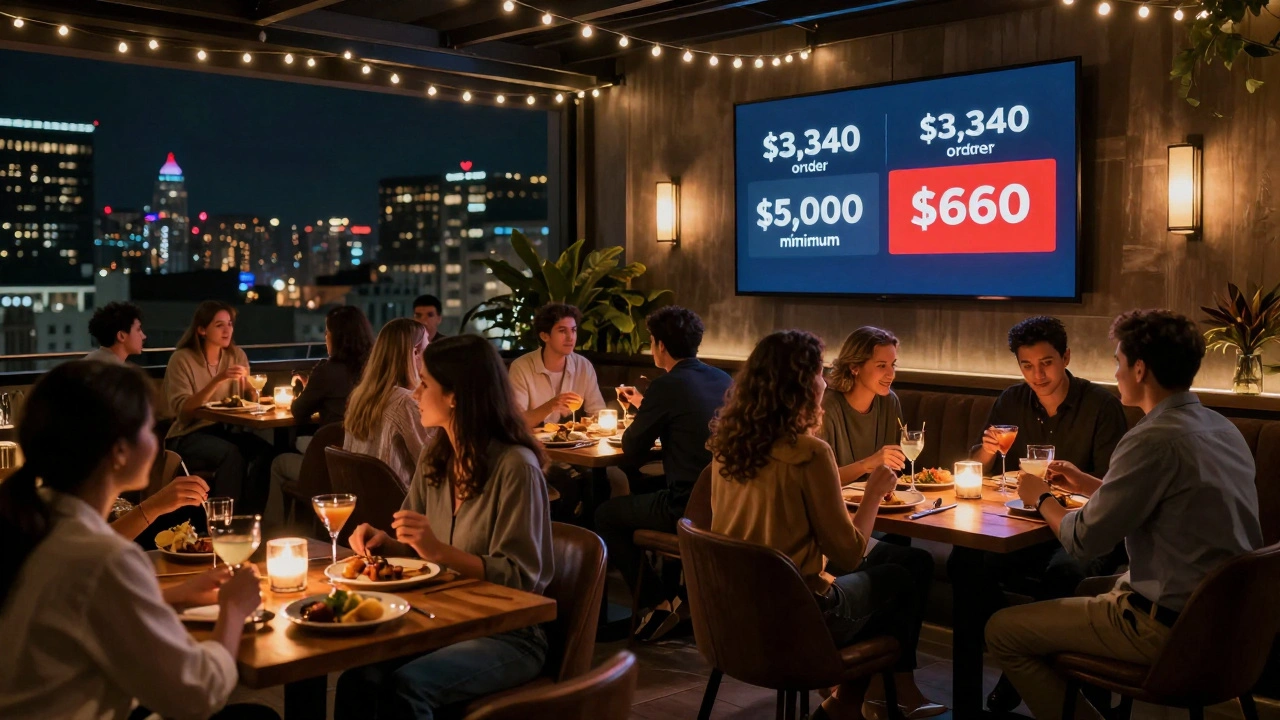
A venue minimum is the least amount of money you must spend to book a space for your event. This isn’t just the rental fee - it’s the total you need to spend on food, drinks, rentals, and sometimes even staffing. Think of it as a floor, not a ceiling. You can spend more, but you can’t spend less. For example, if a rooftop bar in Chicago has a $5,000 minimum for weekend evenings, that means your entire event - cocktails, appetizers, cake, and service - needs to add up to at least $5,000. The venue doesn’t charge you a separate rental fee. Instead, that $5,000 covers everything. If you only order $3,500 worth of food and drinks, you’ll still pay the $5,000 difference. These minimums vary wildly. A small craft brewery might have a $1,000 minimum for a private tasting room. A high-end hotel ballroom in New York could demand $25,000 for a Friday night wedding. Location, time of year, day of the week, and how busy the venue normally is all affect the number.Why Do Venues Use Minimums?
It’s easy to think venue minimums are just a way for places to make more money. But that’s not the full story. Most venues, especially those in nightlife and event spaces, operate on razor-thin margins. A restaurant that turns tables every 90 minutes makes money on volume. But when you book a private room, they lose that turnover. They can’t seat other guests while you’re there. So they need to cover:- Staff wages (servers, bartenders, bussers)
- Food and beverage costs
- Setup and cleanup time
- Electricity, AC, music, lighting
- Lost revenue from other customers who could’ve used the space
How Minimums Are Calculated
There are two main ways venues set their minimums: food and beverage only or all-inclusive.Food and Beverage Only
This is the most common. The minimum applies only to what you order to eat and drink. You’re not paying for the room, chairs, or tables. But you still have to meet the spending floor. For instance, a jazz club in Austin might require a $4,000 food and beverage minimum. You can order:- 100 cocktails at $25 each = $2,500
- 30 small plates at $18 each = $540
- Dessert platter = $300
All-Inclusive Minimums
Some upscale venues bundle everything. That $10,000 minimum? It includes the room, tables, chairs, linens, staff, and even the DJ. You can’t bring your own cake. You can’t bring your own bartender. Everything must go through them. This is common in hotels, event halls, and luxury lounges. It simplifies things for the venue - but it also means less flexibility for you. If you’re trying to save money by bringing your own alcohol or cake, this type of minimum will kill that plan.
When Do Minimums Apply?
Not every booking has a minimum. Here’s when you’re likely to run into one:- Weekend evenings (Friday and Saturday nights)
- Holiday periods (Valentine’s Day, New Year’s Eve, Mother’s Day)
- Private rooms or exclusive areas
- Large groups (usually 15+ people)
- Venues with high overhead (rooftops, downtown bars, hotel ballrooms)
- Weekday afternoons
- Late-night slots (after 11 p.m.)
- Off-season months (January, February)
- Smaller gatherings (under 10 people)
How to Navigate Venue Minimums Without Getting Screwed
You don’t have to pay more than you can afford. Here’s how to play the game smart.1. Ask for the Minimum in Writing
Don’t take a manager’s word. Get the minimum spelled out in your contract. Make sure it says whether it’s food and beverage only or all-inclusive. Also, ask if gratuity is included or if it’s added on top.2. Know Your Guest Count
Estimate your guest count accurately. If you say “about 30” and end up with 22, you might still be on the hook for the minimum. Venues base their staffing on the number you promise. So don’t inflate it to get a better rate - you’ll pay more in the end.3. Choose Your Menu Wisely
Cocktails and premium liquor add up fast. A $14 draft beer might cost the venue $3. A $22 cocktail? They might spend $7 on ingredients and labor. That’s a 300% markup. You’re not paying for the cost - you’re paying for the experience. But if you’re trying to stretch your budget, go for:- Beer and wine instead of cocktails
- Plated meals instead of passed hors d’oeuvres
- One signature drink instead of a full bar
4. Negotiate Based on Timing
Ask: “What’s your minimum on a Thursday night?” or “Can we get a lower minimum if we book for 7 p.m. instead of 9 p.m.?” Venues are often willing to drop minimums by 10-20% if you’re flexible. A 7 p.m. reservation means less staff, less cleanup, and lower risk of noise complaints. That’s a win-win.5. Use the Minimum as a Guide, Not a Trap
If your minimum is $6,000 and you have 50 guests, that’s $120 per person. That’s a lot - but it’s doable. Plan your menu to hit that number, not go over it. Don’t order extra just because you can. You’re not getting a refund if you spend less.What Happens If You Don’t Meet the Minimum?
You pay the difference. That’s it. There are no hidden fees, no surprise charges - just a simple balance due at the end of the night. Most venues will send you an itemized bill showing what you ordered and how much you’re short. Some venues will let you pay the difference in advance. Others wait until the event ends. Either way, you’ll know exactly how much you owe. No surprises.
Alternatives to High Minimums
If a venue’s minimum is too high for your budget, don’t give up. Look for:- Non-profit spaces: community centers, libraries, or art galleries often rent out rooms for low rates
- Outdoor public parks: if weather permits, you can get permits for picnics or small gatherings
- Restaurant private dining rooms: many casual restaurants have small rooms with $1,500-$3,000 minimums
- Co-working spaces: some now offer event packages with food and drink add-ons
Real-World Example: A Wedding in Seattle
A couple wanted to host their wedding reception at a popular downtown lounge. The venue quoted a $12,000 minimum for Saturday night. That felt impossible. But they asked:- Could they book on a Friday?
- Could they skip the open bar and go with beer, wine, and one signature cocktail?
- Could they bring their own cake?
- 100 glasses of wine at $12 = $1,200
- 150 beers at $7 = $1,050
- 100 signature cocktails at $18 = $1,800
- 50 plated meals at $35 = $1,750
- Wedding cake (brought from local bakery) = $0
- Gratuity (18% of $5,800) = $1,044
Final Takeaway
Venue minimums aren’t designed to trick you. They’re designed to keep the lights on so you can have a good time. The key is to understand them, ask questions, and plan around them. Don’t assume the first quote is the only option. Negotiate. Shift your date. Change your menu. You’ll be surprised how much flexibility venues offer - if you ask.Bottom line: Know your numbers. Know your options. And don’t let a minimum scare you away from the perfect space.
LATEST POST



Girls' Night Out in South Bank: Best Bars, Clubs & River Views
16 Oct 2025 | 07:00 AM
Best Karaoke for Mixed-Age Groups in London: Family-Friendly Slots
27 Jan 2026 | 09:51 AM
Cancellation Policies: What's Flexible vs Non-Refundable
24 Feb 2026 | 09:54 AM
How to Pace Yourself at Bottomless Brunch in London for Girls
24 Dec 2025 | 09:46 AM
How to Join Preferred Guest Programs in London Bars
24 Nov 2025 | 09:55 AM