 10
Dec,2025
10
Dec,2025
Choosing the right wine doesn’t need to feel like a test. You walk into a store, stare at rows of bottles, and wonder: red, white, or rosé? It’s not about prestige or price tags-it’s about what fits your taste, the food, and the moment.
Red Wine: Bold, Warm, and Versatile
Red wine gets its color from fermenting grapes with their skins on. That’s where the tannins come from-the drying, grippy feeling you get on your tongue. Tannins aren’t bad; they’re what give reds structure and aging potential.
If you’re new to reds, start with something light and fruity. Pinot Noir from Oregon or Central Otago in New Zealand is smooth, with notes of cherry and earth. It’s not heavy. You can chill it slightly-just 15 minutes in the fridge-and it becomes even more refreshing.
For something richer, try Shiraz. Australian Shiraz, especially from Barossa Valley, is full-bodied, dark, and packed with blackberry, chocolate, and a hint of pepper. It pairs perfectly with grilled steak, lamb shanks, or even a mushroom risotto.
Don’t ignore Cabernet Sauvignon. It’s the classic. Thick, structured, with blackcurrant and cedar. It’s the wine you reach for when you want something that feels substantial. But it needs time to breathe. Pour it an hour before dinner, or use a decanter.
White Wine: Crisp, Bright, and Easy to Drink
White wine is made by separating the juice from the skins before fermentation. That means no tannins. No heaviness. Just freshness.
Chardonnay is the most common white, but it’s not one thing. In cool climates like Margaret River in Western Australia, it’s lean and citrusy-think green apple and flint. In warmer regions like California, it’s buttery, oaked, and rich with vanilla and tropical fruit. If you like creamy textures, go for the oaked version. If you want zing, pick unoaked.
Sauvignon Blanc is your go-to if you crave acidity. New Zealand Sauvignon Blanc, especially from Marlborough, explodes with passionfruit, lime, and cut grass. It’s the wine you drink on a hot afternoon. Serve it cold. With seafood, salads, or just on its own.
Pinot Grigio from Italy is light, clean, and almost watery in the best way. It’s not complex, but it’s perfectly refreshing. Perfect for a quick lunch or a picnic. Don’t overthink it. Just chill it and pour.
Rosé Wine: The Middle Ground That Works Everywhere
Rosé isn’t just pink wine. It’s a category of its own. Made by letting red grape skins touch the juice for a few hours-sometimes just 12-before removing them. That short contact gives color without heavy tannins.
Provençal rosé from southern France is the gold standard. Pale salmon, dry, with hints of strawberry, orange peel, and wet stone. It’s not sweet. It’s not fruity. It’s elegant. Perfect for brunch, grilled fish, or sipping by the pool.
Australian rosés are getting better fast. Look for ones made from Grenache or Shiraz. They’re fruitier than French versions, with ripe raspberry and a touch of spice. Great with charcuterie boards or spicy Thai food.
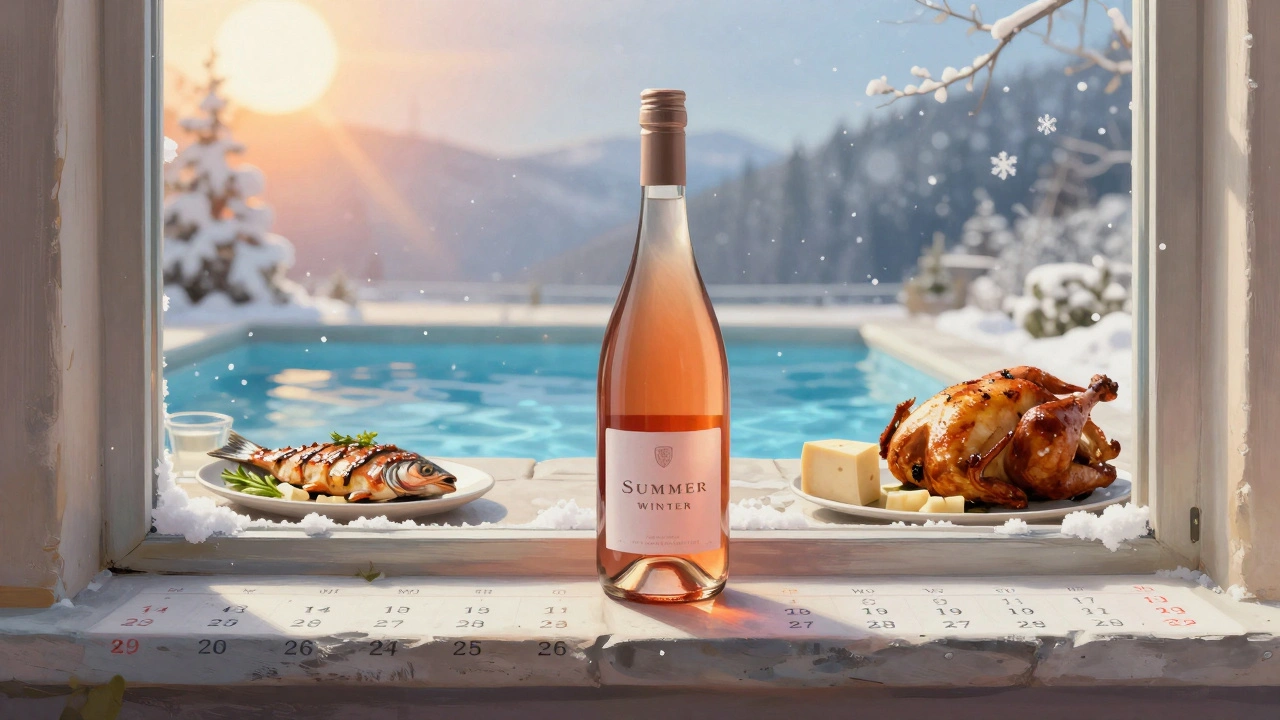
And yes, you can drink rosé in winter. It’s not just a summer drink. A chilled, dry rosé with roasted chicken or a cheese platter in December feels just right.
How to Match Wine With Food (Without Stress)
You don’t need a degree in sommelier studies to pair wine and food. Think in simple contrasts and complements.
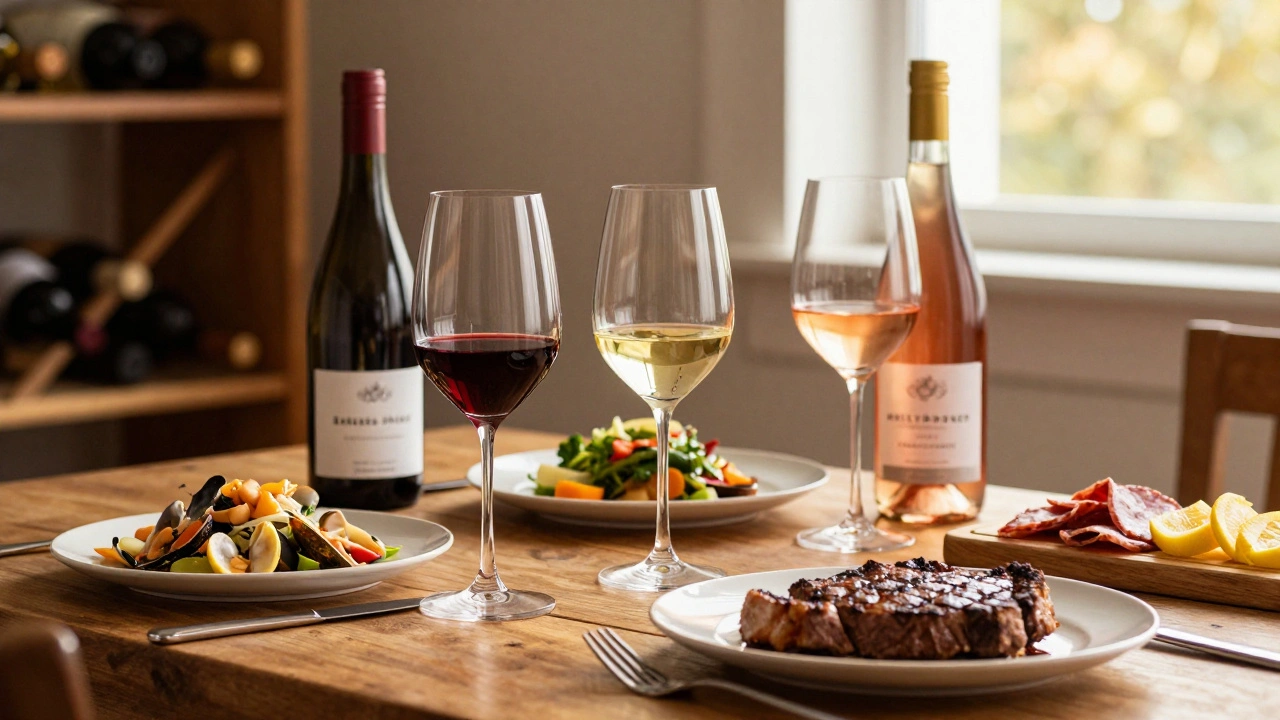
- Red wine + fatty food: Steak, lamb, duck. The tannins cut through the fat.
- White wine + acidic food: Lemon-dressed salads, seafood, goat cheese. The wine’s acidity matches the food’s brightness.
- Rosé + everything: Salads, grilled veggies, ham, pizza, charcuterie. It’s the most flexible.
Rule of thumb: If the food is light, pick a light wine. If it’s bold, pick a bold wine. That’s it.
Temperature Matters More Than You Think
Most people serve red wine too warm and white wine too cold.
- Reds: Serve at 16-18°C. That’s room temperature in a cool house. If it’s warm outside, chill it for 20 minutes. You don’t want it tasting like alcohol soup.
- Whites and rosés: Serve at 8-10°C. That’s fridge-cold, but not ice-cube cold. If it’s too cold, you lose all the flavor.
Keep a bottle in the fridge for quick access. Use a wine cooler if you drink often. It’s not fancy-it’s practical.
What to Buy When You’re Not Sure
Here are three reliable bottles to start with, available in most Australian stores:
- Red: Yalumba The Virgilius Shiraz (Barossa, Australia) - rich, smooth, great value.
- White: Leeuwin Estate Art Series Chardonnay (Margaret River) - crisp, complex, worth the splurge.
- Rosé: Mollydooker The Boxer Rosé (South Australia) - fruity, dry, fun, and under $25.
Don’t wait for a special occasion. Try one of these tonight. Open it. Pour it. Taste it. That’s how you learn.
Common Mistakes to Avoid
- Buying based on label art: A pretty bottle doesn’t mean good wine. Look at the region and grape, not the picture.
- Thinking expensive = better: A $15 bottle of Pinot Noir can outshine a $50 one. Don’t let price dictate your choice.
- Ignoring vintage: For most wines under $30, vintage doesn’t matter much. But for serious reds, 2022 and 2023 were excellent years in Australia.
- Storing wine in the kitchen: Heat and light kill wine. Don’t keep it above the stove or in a sunny window.
What’s the best red wine for beginners?
Pinot Noir is the easiest red to start with. It’s light, fruity, and low in tannins. Try one from Central Otago in New Zealand or the Yarra Valley in Australia. It won’t overwhelm your palate.
Is rosé wine sweet?
Most rosés you’ll find in Australia are dry-not sweet. If it tastes fruity, that’s from the grape, not added sugar. Look for "dry" on the label if you’re unsure. Avoid "blush" wines, which are often sugary.
Can you chill red wine?
Yes, especially in warm climates like Sydney. Light reds like Pinot Noir and Gamay benefit from a 15-20 minute chill. Heavy reds like Shiraz or Cabernet should stay closer to room temperature, but never warm.
How long does opened wine last?
Red wine lasts 3-5 days if sealed and stored in the fridge. White and rosé last 5-7 days. Use a wine stopper and keep it cool. If it tastes flat or vinegary, it’s gone.
What’s the difference between cheap and expensive wine?
Cheap wine is made in large batches, often from blended grapes. Expensive wine usually comes from smaller vineyards, older vines, and more hands-on care. But taste isn’t always tied to price. Many $20 wines taste better than $80 ones. Trust your own palate.
Next Steps: Start Tasting, Not Just Buying
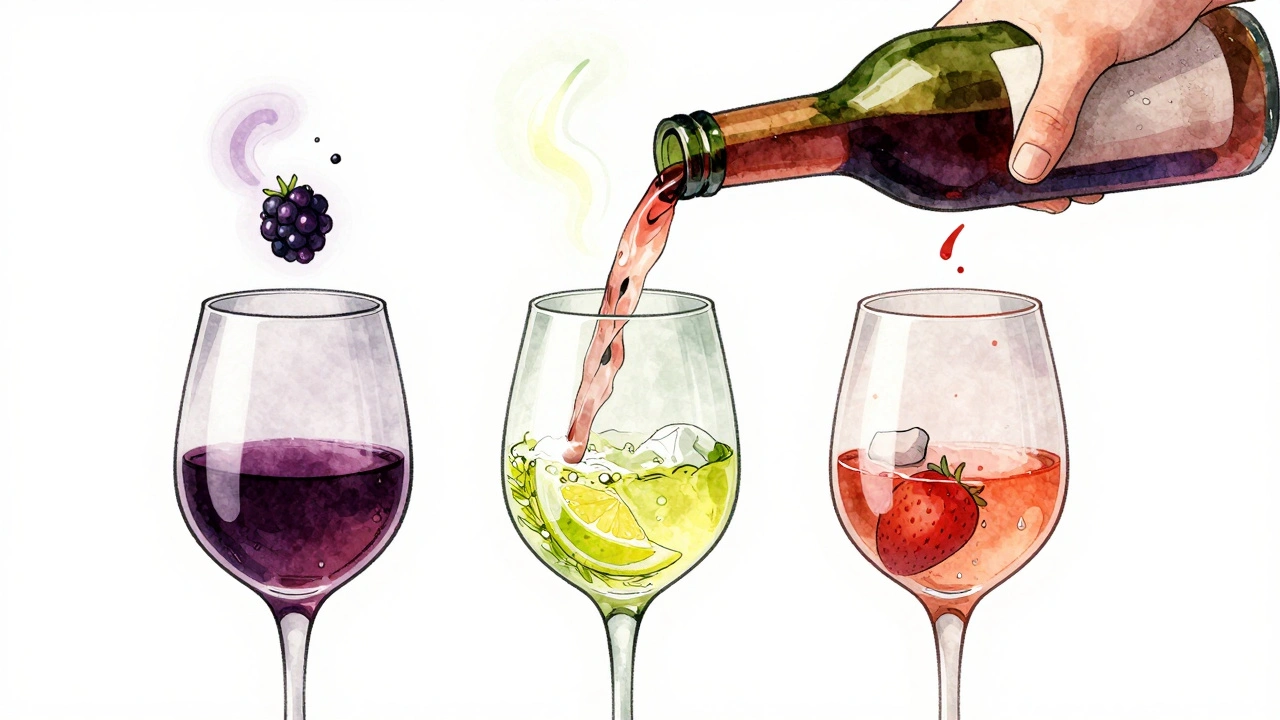
Don’t wait for the perfect moment. Open a bottle tonight. Try one red, one white, one rosé side by side. Notice how the flavors change. How the texture feels. Write down what you like. You’ll start recognizing patterns-maybe you always prefer crisp whites, or maybe you love bold reds with a smoky finish.
Wine isn’t about knowing everything. It’s about finding what makes you happy. The more you taste, the more confident you’ll get. No labels. No rules. Just good drinks and good company.